



Updated August 2026. Written by the Mobility Co team, Cheltenham.
If your parent is becoming unsteady on their feet, two things help most: making the home safer, by clearing trip hazards, improving lighting and adding something steady to hold, and giving them the right walking aid so they stay confident and keep moving. If you are worried, ask their GP for an occupational therapy falls assessment. We fit walkers to the person at our Cheltenham showroom and across bayside Melbourne.
Balance quietly relies on strength, eyesight, inner-ear signals and confidence, and any of them can fade with age, medication changes, or after an illness or a first stumble. The reassuring part is that steadiness can be trained: a large Cochrane review found that regular balance and strength exercise cuts the rate of falls by about a quarter, so a little practice on most days genuinely pays off. Often the earliest sign is not a fall but a change in behaviour: reaching for furniture as they cross a room, slowing down, holding walls, or quietly giving up walks and outings they used to enjoy. Noticing it early is a gift, because the changes that keep someone steady and independent are simple, and far better made now than after something goes wrong.
A lot of unsteadiness is about the environment as much as the person:
These cost little and help everyone in the house, not just your parent.
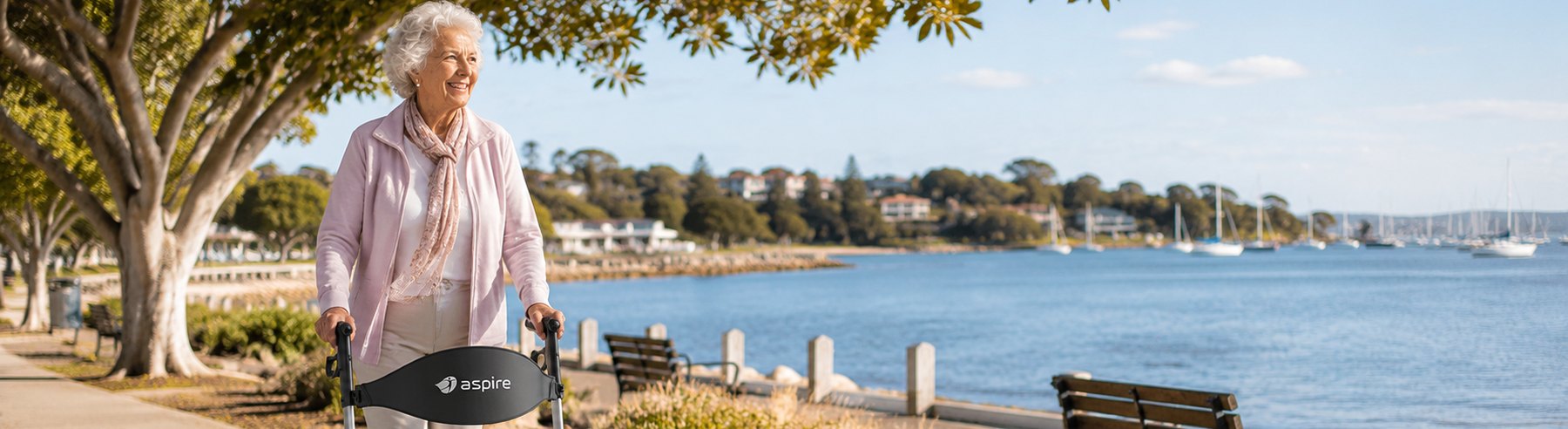
When someone is steady enough to walk but needs support and confidence, the right walking aid keeps them moving rather than housebound. A walking frame is the most stable option, lifted and placed so they can take real weight through it, ideal indoors and over short distances. A four-wheel rollator, or seat walker, rolls with them, has hand brakes and a built-in seat so they can walk further knowing they can stop and rest, which is often the difference between staying home and getting back out to the shops and friends. The right one depends on how much support they need, and that is exactly what a fitting sorts out. Our guide to the best walkers and rollators in Melbourne explains the types in plain English.
Sometimes walking itself has become too tiring, and that is worth naming honestly. If your parent runs out of energy before they get where they want to go, or has stopped going out because the distance defeats them, a mobility scooter can give them back far more of their week. And if the hard part is getting up from the chair or out of bed in the first place, that is a different fix again. We would always rather point you to the thing that genuinely helps than sell you a walker that is not quite enough.
A walker set to the wrong height makes someone lean, and leaning is the opposite of steady, so we fit every walker to the person: handles at the wrists, seat at the right height, brakes they can reach and squeeze. Try the range at our Cheltenham showroom at 2/136 Keys Road, or, because a worried or unsteady parent is not always up for an outing, we bring walkers to homes across bayside and south-east Melbourne, from Black Rock and Parkdale through Cheltenham and Mentone to Brighton and the surrounding suburbs, and set them up on the spot.
Often, yes, and because walkers sit at the lower end of the price range many families simply buy outright. Where funding applies, we are a registered provider and prepare compliant quotes, usually within 24 hours.
If a fall or near-miss has already happened, ask their GP for a referral to an occupational therapist for a falls assessment, and we will prepare any equipment quote in the format they need. Call 1300 225 203 with no obligation.
Worried your parent is getting wobbly on their feet? Come and try a walker or rollator at our Cheltenham showroom, or we will bring one to their home anywhere in bayside Melbourne and fit it to them.
Common signs are reaching for furniture or walls as they move around, slowing down, losing confidence, or quietly giving up walks and outings. If they are steady enough to walk but need support, a walker or rollator usually helps. If they have had a fall or near-miss, ask their GP for an occupational therapy assessment as well.
A walking frame has no wheels, or two at the front, so you lift or ease it forward and take real weight through it, which makes it the most stable option, best indoors. A rollator, or seat walker, has four wheels, hand brakes and a seat, so it rolls with you and lets you rest, best for getting out and about. The right one depends on how much support the person needs.
Clear trip hazards like loose rugs and clutter, improve lighting especially at night and on stairs, add grab rails where balance is tested, check their footwear, and give them the right walking aid so they feel steady. For a proper assessment, ask their GP about an occupational therapy falls review.
Yes, for people who are steady enough to walk and guide them. Because a rollator is on wheels, the person should always apply the park brakes before sitting or leaning on it. If someone needs to take full weight through the aid to stand, a walking frame is safer. We help judge which is right at a fitting.
Support at Home, which replaced Home Care Packages in 2025, may fund a walker through its AT-HM scheme where an assessor agrees it is needed, and NDIS may where it relates to a participant’s disability. We are a registered provider and prepare compliant quotes, usually within 24 hours.
That is worth acting on. If walking distances have become exhausting, a mobility scooter can give back a lot more independence, and if standing up is the real struggle, a lift chair or adjustable bed may be the better answer. Come and talk it through and we will point you to what genuinely fits.
Make the home safer, clear hazards, add light and grab rails, then give your parent the right walking aid so they stay confident and keep moving: a frame for maximum stability, a rollator for getting out with a seat to rest. If walking has become exhausting, look at a scooter instead. Try the range at our Cheltenham showroom, or we will bring it to their home anywhere in bayside Melbourne. Call 1300 225 203.
Related reading: How to reduce falls at home and our Bayside home safety guide.

Daylan Kempster is an assistive technology specialist and the director of Mobility Co, a family owned mobility equipment showroom in Cheltenham, Melbourne. He has close to ten years of experience in the assistive technology and healthcare sector, gained across several companies, working with older Australians managing the changes of ageing, younger people living with disability, and people who need the right equipment for a short time while they recover from surgery. He writes these guides from hands on experience helping families choose beds, chairs, scooters and walkers that suit a real home. Connect with Daylan on LinkedIn.
Our most popular categories, all available to see and try at our Cheltenham showroom in Melbourne.