A fall can knock a person’s confidence as much as it hurts them, and the worry of one can quietly shrink someone’s world. The good news is that falls are not simply bad luck. They have causes, and almost all of those causes can be reduced. Here are the things that actually work, starting with the one that has the strongest evidence behind it.

Why falls happen
Falls usually come from a mix of things rather than a single cause: weaker legs and poorer balance, medications that cause dizziness, eyesight that has slipped, unsafe footwear, and hazards around the home like loose rugs and dim lighting. Health conditions such as after a stroke or living with Parkinson’s add to the risk. The encouraging part is that nearly every one of these can be improved.
The most proven step: strength and balance
If you do only one thing, make it this. There is strong, consistent evidence that exercise which challenges your balance and builds leg strength reduces falls in older people. A major Cochrane review that pooled 108 trials found it lowers the rate of falls by around 23%, and balance and strength focused programs by about 24%. It is one of the most effective single steps available, and it works at almost any age or starting point.
The exercise that helps is not just a gentle stroll. It needs to safely challenge balance, standing on one leg while holding a bench, heel to toe walking, stepping in different directions, and build the leg strength that keeps you steady, such as rising from a chair without using your hands. Tai chi has a particularly good track record for balance.
The safest way to begin is with a professional. A physiotherapist or exercise physiologist can set a program that suits the person and is safe to build up, and many councils and community health services run supervised strength and balance classes for older people. Start small, stay consistent, and build up gradually. This is the lever with the biggest payoff.
If you want just one exercise to start with today, make it the sit to stand, which is really a gentle squat using a chair. It builds the exact leg strength you rely on every time you get up, and because rising from a seat is one of the moments people most often lose their balance, it pays off twice over.
How to do a sit to stand safely
- Use a sturdy chair without wheels. Sit toward the front, feet flat and about hip width apart, drawn back slightly under you.
- Lean forward so your nose is over your toes, then push up through your heels to stand tall.
- Stand fully upright and pause a moment to steady yourself.
- Lower back down slowly and with control rather than dropping into the seat. The slow way down is where much of the strength is built.
- Start with what you can manage, even five is a good start, and build toward ten. In time, aim for two or three rounds on most days.
Keep a bench or rail within reach when you begin, and lean on the armrests only if you need to, working toward doing it hands free. If it brings on pain or dizziness, stop, and have a chat with your GP, a physiotherapist or an exercise physiologist before you build it up.
Make the home safer
The other big lever is the home itself, and most of it is quick and inexpensive.
The five quickest wins
- Light the path to the bathroom for night trips, with a sensor light and a lamp by the bed.
- Remove or tape down loose rugs, a leading trip hazard.
- Add grab rails by the toilet and in the shower, fixed to the wall.
- Keep walkways clear of cords and clutter.
- Make sure the bed and the main chair are at a height that is easy to rise from.
Our companion guide, staying safe and independent at home, walks the whole house room by room and has a printable checklist you can work through. For a trusted general overview, the Victorian Government’s Better Health Channel also has a plain English guide to preventing falls at home.
Look after the whole person
A few simple checks make a real difference. Ask a pharmacist or GP to review medications, since some cause dizziness or drowsiness, especially in combination. Have eyesight checked, because out of date glasses are a common and easily fixed cause. Wear well fitting, flat, non slip shoes indoors rather than socks or loose slippers. And keep generally active and well hydrated, since both inactivity and dehydration add to unsteadiness.
Aids and equipment that help
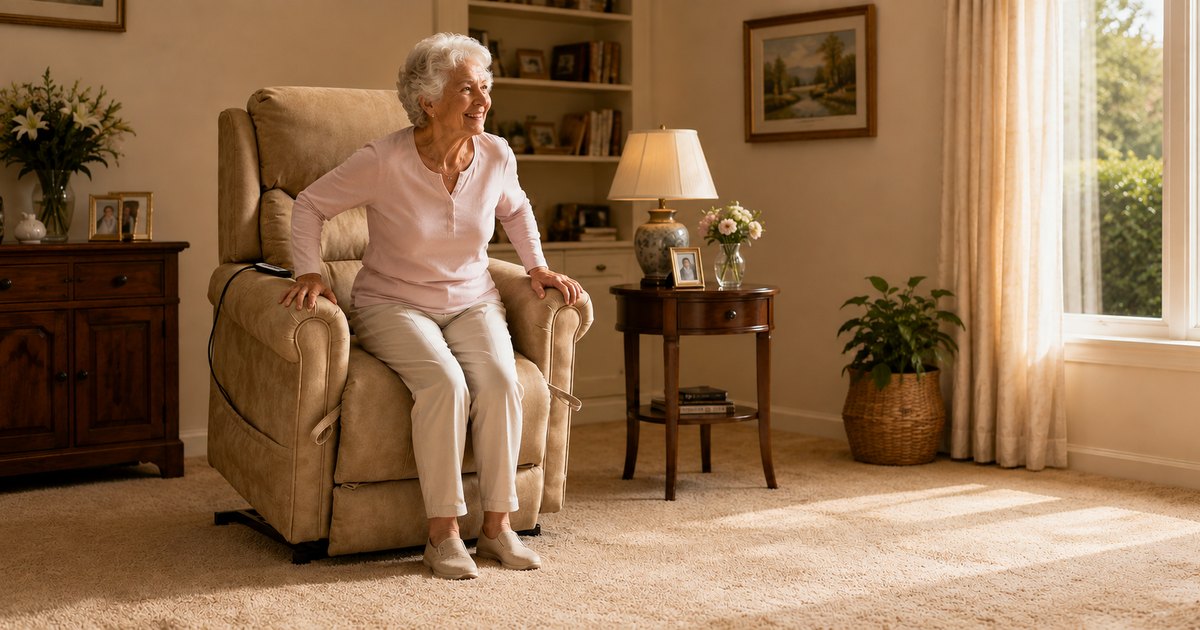
Well chosen aids take the risk out of the moments that matter most. A walker or rollator gives steadiness on the move, a lift recliner makes rising from a chair safe and easy, an adjustable bed makes getting in and out simpler, and a personal alarm means help is close if a fall does happen. The trick is matching the aid to the person, which is exactly where an occupational therapist comes in.
When to talk to an occupational therapist
If falls, or near misses, are a worry, an occupational therapist is the right person to call. They look at the whole picture, the person, how they move, and the home, spot the risks a family stops noticing, and recommend and prescribe the aids that will genuinely help. They can also point you toward the right strength and balance program, and their assessment is usually what unlocks funding for equipment through the NDIS, Support at Home, a Home Care Package or DVA. Ask your GP for a referral, or get in touch and we will gladly help you find one and work alongside them.
Common questions
What is the most effective way to reduce falls at home?A combination of strength and balance exercise and simple home safety changes. Of the two, exercise that challenges balance and builds leg strength has the strongest evidence behind it.
Can exercise really prevent falls?Yes, and it is well proven. A Cochrane review of 108 trials found that exercise lowers the rate of falls by around 23%, and balance and strength work by about 24%. Tai chi and supervised strength and balance classes are good examples.
What kind of exercise helps most?Exercise that gently challenges balance, such as standing on one leg or heel to toe walking, and that builds leg strength, such as rising from a chair. A physiotherapist or exercise physiologist can set a safe program.
How do I do a sit to stand exercise safely?Sit toward the front of a sturdy chair without wheels, feet flat and about hip width apart. Lean forward so your nose is over your toes, push up through your heels to stand tall, then lower back down slowly and with control. Start with five and build toward ten, keep a bench or rail within reach, and use the armrests only if you need to. Stop if it brings on pain or dizziness, and check with your GP, a physiotherapist or an exercise physiologist before you build it up.
What are the quickest home changes to make?Light the night-time path to the bathroom, remove or secure loose rugs, add grab rails in the bathroom, and keep walkways clear. Our home safety guide has a full checklist.
When should we see an occupational therapist?If there have been falls or near misses, or getting around is getting harder. An OT can assess the home and the person, prescribe the right aids, and their input usually unlocks funding.
Will funding cover falls-prevention equipment?Often yes, through the NDIS, Support at Home, a Home Care Package, or DVA for eligible veterans, usually after an occupational therapist assessment. We provide compliant quotes.
Come and see us in Cheltenham
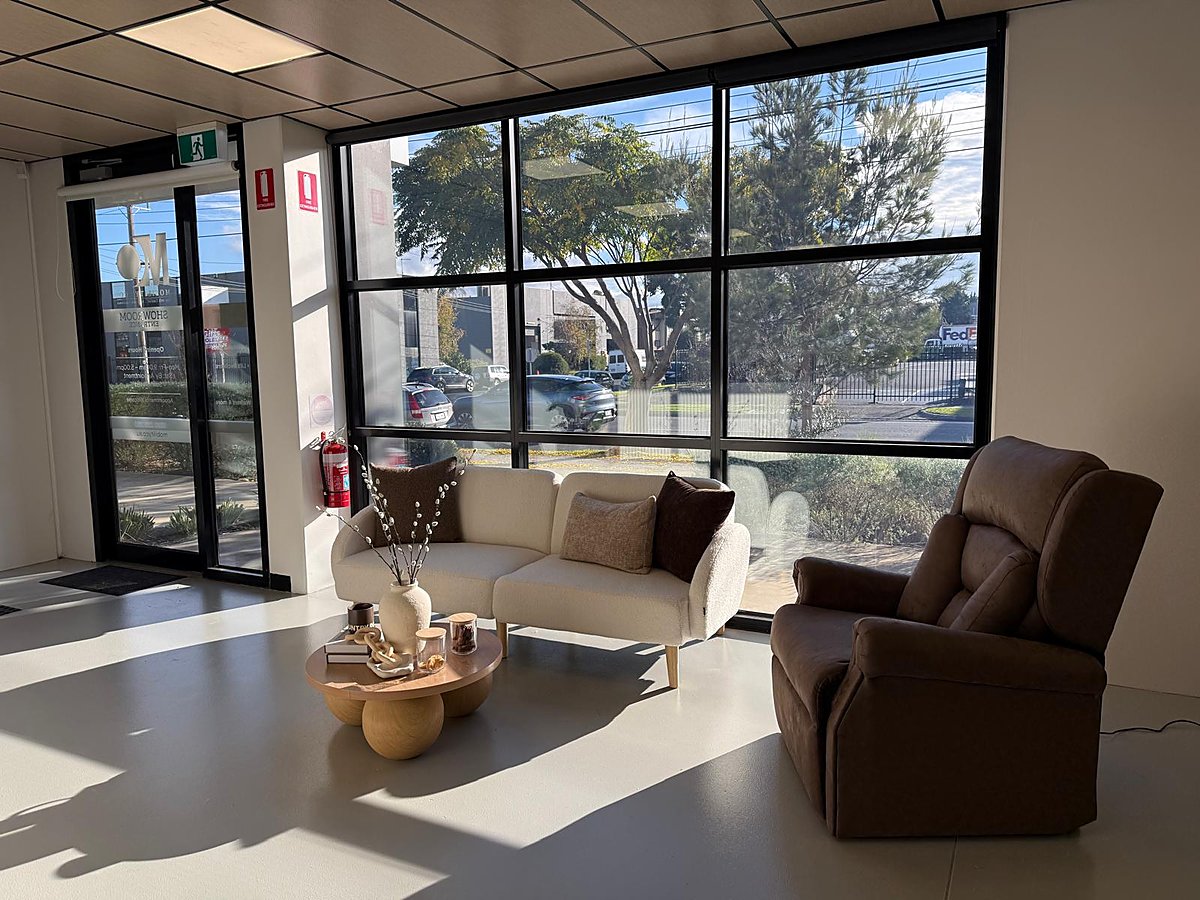
We help bayside families reduce falls risk every day, with honest advice and the right aids for the person, never a hard sell. Come and see how things work in a real room, or ask us out for a free in-home demonstration. We are glad to work with your occupational therapist.

Cheltenham showroom · 1300 225 203 · Free in-home demonstrations across bayside Melbourne
What our customers say
RepOcean verifies that the original source of the review is Google. If you are looking for an equipment supplier specialising in low and mid cost AT - including recliners and pressure care cushions, then look no further than Mobility Co.
They are a lovely small business owned by a cute and lovely young couple.
They have a showroom downstairs and they have a workspace upstairs, which they allow mobile therapists to use when they are in transit, and seeking a place to make a cuppa/heat food and sit down to finish off some admin work!
Owner, Daylan is very responsive and has a wealth knowledge to help any buyer!
Customer car parking in the lot
RepOcean verifies that the original source of the review is Google. As an OT, I cannot recommend Daylan and his team enough. They always go the extra mile to help out. Their product knowledge is outstanding, and they consistently provide all the right information and practical suggestions for what will suit best. They are super easy to communicate with and seamless to work alongside. Highly recommended!
RepOcean verifies that the original source of the review is Google. RepOcean verifies that the original source of the review is Google. We met our OT and Daylan at the extensive showroom in Cheltenham. From the minute my parents and I walked in the door, we felt like family. They genuinely cared about finding the best solutions for our needs. We ordered a recliner and a wheelchair and within two days, Daylan was personally delivering and installing everything. He is a super nice and caring person and made my parents feel comfortable and confident in what they were buying. It was a pleasure dealing with him and even nicer to be supporting a local family business. Thanks Daylan.
RepOcean verifies that the original source of the review is Google. Daylan and the team at mobility co went above and beyond to help my Mum. They delivered, set up and followed up after delivery to ensure everything went smoothly. Highly recommend. Exceptional service and genuine care for the clients.
RepOcean verifies that the original source of the review is Google. As an OT who has worked with many different suppliers, Mobility Co really stands out. They have excellent product knowledge and combine this with genuine personal care of each client. Daylan and the team have been so wonderful to work with and are lovely people who are passionate about making a difference in the industry. Couldn’t recommend them highly enough!
RepOcean verifies that the original source of the review is Google. Daylan was extremely helpful, patient and so pleasant to deal with. His customer service was thoroughly outstanding, making my job of navigating My Aged Care for my mother so much easier.
It also was satisfying to support good people who own a small business. The attention to detail and follow up is second to none.
I highly recommend Mobility Co. They can really guide and assist you. Do yourself a favour!
RepOcean verifies that the original source of the review is Google. RepOcean verifies that the original source of the review is Google. RepOcean verifies that the original source of the review is Google. Took my nan in to mobility co in Cheltenham to look at adjustable beds, Daylan gave her plenty of time to try a few and find the right one no pressure at all. They delivered it set it up and took the old bed away. Easy to deal with and way more helpful than a normal bed shop, good option for anyone in bayside.
Related reading
This guide is general information to help families think things through, and is not a substitute for advice from your GP, physiotherapist or occupational therapist about an individual person or home.