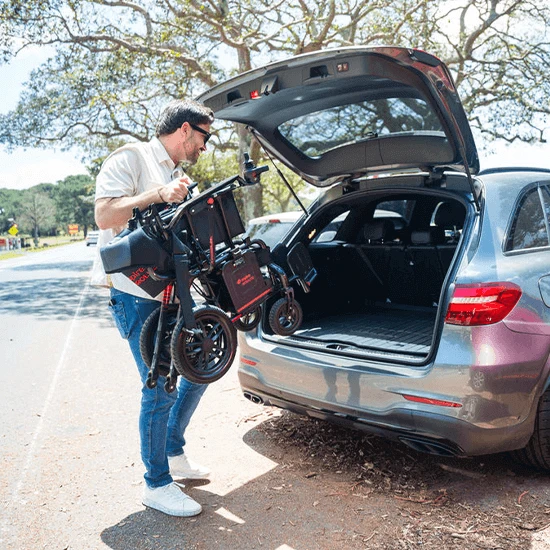
Flying with a Mobility Scooter or Power Wheelchair
Travel guide · Updated November 2026
Flying with a mobility scooter or power wheelchair in Australia
The battery is the part that catches most people out. Here’s how to check yours in two minutes, which travel models are flight friendly, what each Australian airline asks for, and how to protect your scooter or chair on the way.
Written and reviewed by Daylan Kempster, Assistive Technology Specialist at Mobility Co. Airline rules last checked 13 November 2026.
★★★★★5.0 on Googlefrom 49 local reviews
Local and family runOur Cheltenham showroom
Try before you flyFold it, lift it, drive it
Support at Home and NDISSupplying under both
Can you take a mobility scooter or power wheelchair on a plane? Yes, in most cases. Qantas, Virgin Australia, Jetstar and Rex will generally carry a mobility scooter or power wheelchair with a lithium battery of up to 300 watt hours (Wh), as long as you tell them before you fly and they approve it. If the battery comes off, it travels with you in the cabin while the scooter or chair goes in the hold.
The short version
Know your watt hours. Volts × amp hours = Wh. Under 300 Wh is the number to look for.
Tell the airline early. When you book, and at least 48 hours before you fly.
Have your details ready: battery type and Wh, weight, heaviest piece and folded size.
It’s usually free. Qantas, Jetstar and Rex carry mobility aids on top of your baggage allowance.
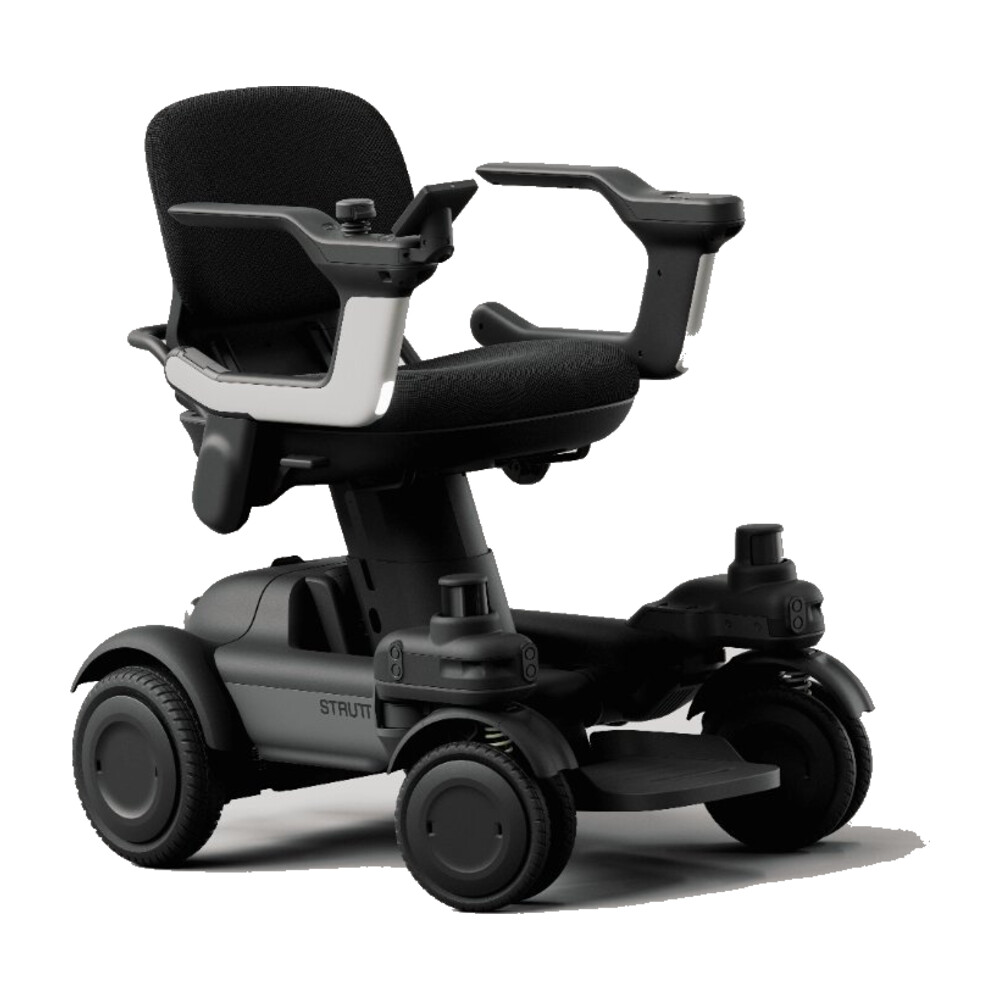
Battery too big? Many models, like the Aspire Elio and Strutt ev1c, have a smaller travel battery.
How do I work out my battery’s watt hours?
Airlines don’t go by amps or watts alone. The number that matters is watt hours (Wh), which is the battery’s stored energy. Many lithium batteries have it printed on the label. If yours doesn’t, it’s an easy sum using two numbers that are always there:
Volts (V) × Amp hours (Ah) = Watt hours (Wh)
If your label shows milliamp hours (mAh), divide by 1,000 first. For example, 12,000 mAh is 12 Ah.
24V × 10Ah
= 240 Wh
Within the 300 Wh limit
24V × 12Ah
= 288 Wh
Within the 300 Wh limit
24V × 20Ah
= 480 Wh
Over 300 Wh, needs a travel battery
32V × 20Ah
= 640 Wh
Over 300 Wh, needs a travel battery
A tip from us: take a clear photo of your battery label and keep it on your phone. Check in staff need to see the Wh rating, and if they can’t confirm it, they can refuse the battery. Not sure what you’ve got? Bring your scooter or chair in and we’ll check it for you.
Which mobility batteries are allowed on a plane?
Lithium, sealed lead acid, gel and AGM batteries can all fly with the airline’s approval. What changes is where the battery goes and the size limit.
Battery type
What usually happens
Lithium, removable Most travel scooters and folding power chairs
Taken off the chair or scooter and carried by you in the cabin, with the terminals covered. Up to 300 Wh. Spares in the cabin too: one up to 300 Wh, or two up to 160 Wh each.
Lithium, fixed Can’t be removed by the user
Stays fitted, the device is switched off and protected so it can’t turn on. Needs the airline’s approval, and larger batteries may need extra safety measures or may not be accepted.
Sealed lead acid, gel or AGM Common on larger scooters
Generally accepted. The device travels in the hold, upright, with the battery isolated. A removed or spare battery goes in the hold in strong, rigid packaging.
Wet, spillable Rare on modern equipment
Strict packing and upright loading rules apply, and some airlines won’t take them. Talk to the airline well before booking.
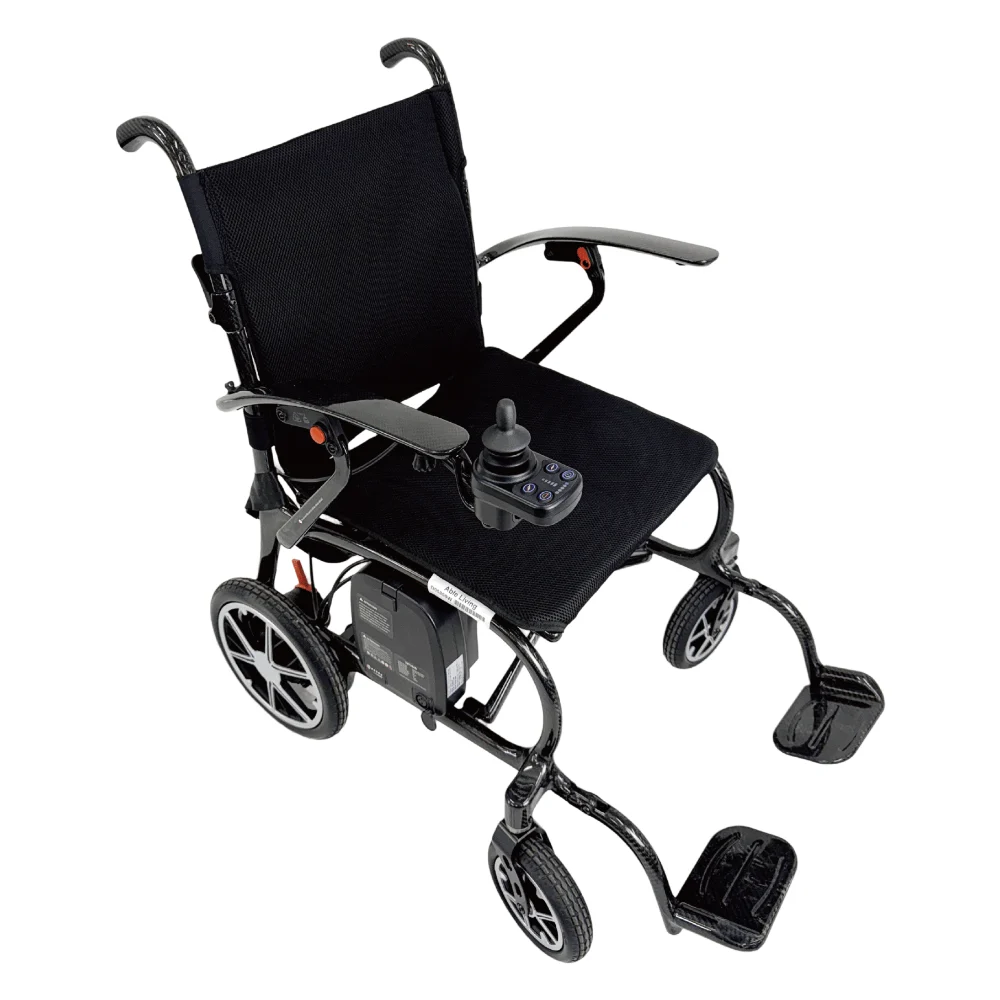
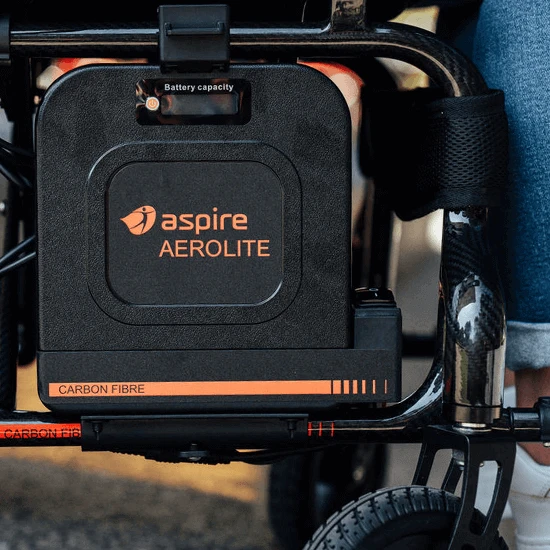
A removable lithium battery, like this one on the Aspire Aerolite, lifts off in seconds and travels with you in the cabin.
Lithium batteries must also be of a type that has passed the UN 38.3 safety tests. Reputable mobility batteries are, and some airlines may ask to see the evidence, so it’s worth having the manufacturer’s spec sheet with you.
Which mobility scooters and power wheelchairs are flight friendly?
These are the travel options in our range. Come in and try them side by side, lift them into your boot, and see how quickly they fold or come apart before you decide.
Folding travel scooter
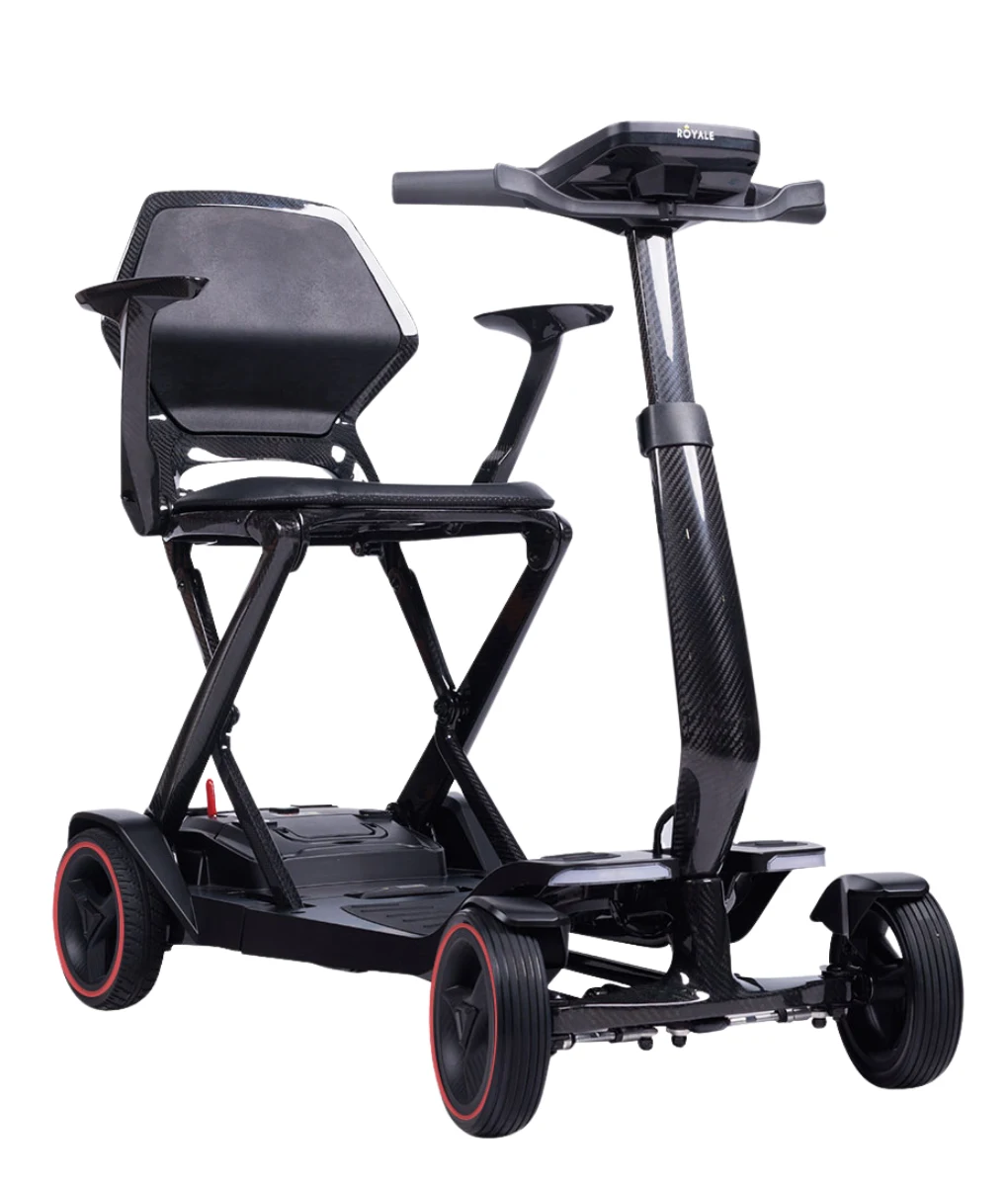
Royale Air Carbon Fibre
Our pick for flying
Two small removable 6Ah lithium batteries, 0.8 kg each, designed with air travel in mind
Just 13.7 kg without batteries, folds in seconds to 52.5 × 44.5 × 69 cm
Wheels along like luggage, up to 16 km with both batteries
Battery details are from the manufacturers. A smaller travel battery means less range, so plan your days around it or take a spare. Always check the label on the battery you’re actually travelling with.
What we check when you choose a travel model
A model that looks light on a spec sheet can still be the wrong one for you. When you come in, these are the things we work through together.
The heaviest piece, not the total weight
Who will be lifting it in and out of the car, the taxi or the hotel lift? A 34 kg scooter that comes apart into a 10.7 kg heaviest piece can be easier to handle than a 20 kg chair that doesn’t.
Your boot and your trip
We measure the folded size against your car boot, and talk through cruises, coaches and hire cars at your destination.
The battery plan
Is the battery under 300 Wh, can it be removed, and do you need a spare to get through a full day of sightseeing?
The ground you’ll cover
Some lightweight chairs suit airports, shopping centres and footpaths but not steep hills. We’ll match the model to where you’ll actually be.
Fit and comfort
Seat width, weight capacity, controls and armrests, checked against you, so a long day out stays comfortable.
Everyday life at home
Most people use their travel model far more at home than on holidays. We make sure it works for both.
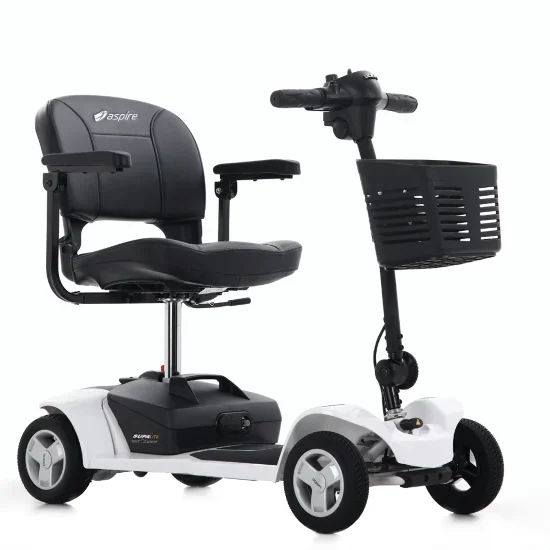
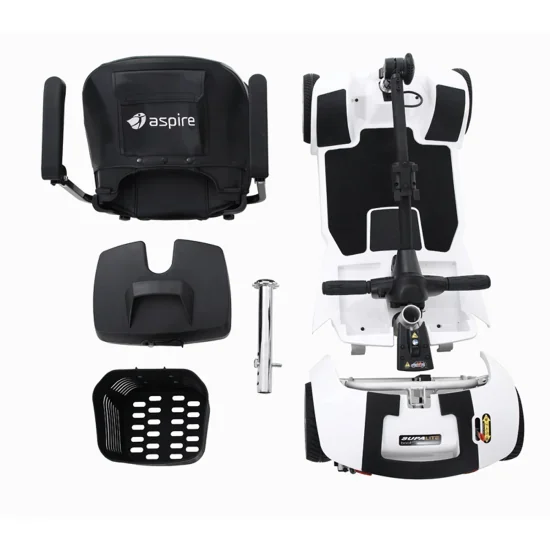
The Supalite comes apart into six pieces. The heaviest is 10.7 kg.The Aerolite folds in one piece and fits most car boots.
Not sure which travel model suits you?
Come in and try them side by side. We’ll show you how each one folds, how the battery comes off, and how it fits in your car.
Tell them at least 48 hours before. Battery powered aids need dangerous goods approval.
Check in 60 minutes before domestic flights. Hand your aid over at check in, or keep it to the gate and be there 40 minutes before departure. It’s returned at the gate where possible, otherwise at baggage collection.
Two mobility aids carried free, on top of your other checked bags. Size limits depend on the aircraft.
Tell them when you book. If your aid is over their size or weight limits, call 13 67 89 at least 72 hours before.
Check in at least 60 minutes before domestic flights. You can ask to take your own battery powered aid to the gate where possible. Collect it from the arrivals carousel.
Weight limits depend on the aircraft (for example 80 kg on the A320). Staff can’t take apart or reassemble your aid, and they have a printable form to attach to it. Ask about charges when you book.
Tell them when you book, including the battery type and weight. Only two wheelchair assistance customers per A320, A321 and domestic 787 flight, so book early.
Check in at least 90 minutes before domestic flights. Battery powered aids must be checked in at the counter, not the gate. Jetstar provides a wheelchair from the aircraft, and your aid comes back at baggage claim.
Two mobility aids carried free on top of your allowance, but only one can be battery powered. Each piece up to 32 kg unless it can travel upright in freewheel mode. A320 and A321 hold limit 1.4 × 1.0 × 1.4 m.
Tell them at least 48 hours before on 13 17 13, and give the weight and size when booking.
Check in 45 to 90 minutes before, depending on the airport.
Two different mobility aids carried free. Smaller aircraft, so size matters: 85 × 130 × 115 cm on the Saab 340.
Checked against each airline’s website on 13 November 2026. Jetstar has published updated assistive device rules that start on 2 February 2027, so check their page if you’re travelling after then. Overseas airlines and connecting flights can have different rules, so check every airline on your journey.
What should I tell the airline when I book?
Airlines need the same handful of details every time. Have them in front of you before you call or fill in the online form, and you’ll get a clear answer much faster.
Have these ready
Make and model, and whether it’s a scooter or power wheelchair
Battery type (lithium, sealed lead acid, gel or AGM)
Battery Wh, and whether it can be removed
Any spare batteries and their Wh
Total weight and the heaviest piece
Folded or packed size
Whether it has a freewheel mode
The help you need through the airport and onto the plane
What to say
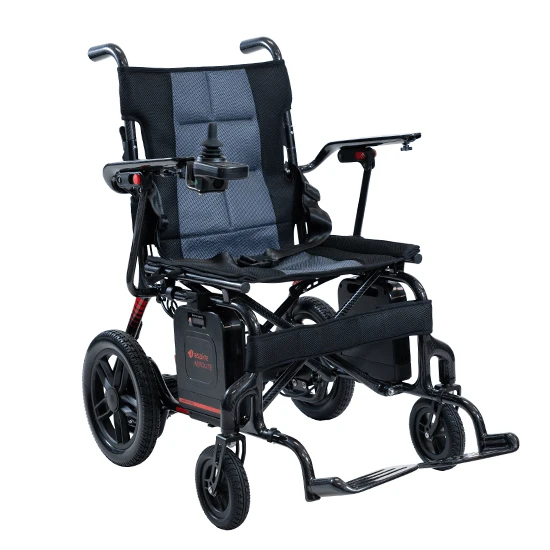
“I’m travelling with a folding power wheelchair, a Pinnacle Featherlite Gen 3. It has one removable 24V 10Ah lithium battery, which is 240 watt hours, and no spare. It weighs about 13.5 kg with the battery and folds to 63 by 26 by 70 cm. I’d like to use it to the gate if possible, and I’ll need wheelchair assistance onto the plane.”
Swap in your own details. Ask them to note it on your booking and confirm the approval by email.
What happens at the airport?
Arrive early and go to the counter. Battery powered aids are checked by staff, so allow extra time and don’t rely on online check in or a kiosk.
Show your details. Have your battery photo, the spec sheet and the airline’s approval ready.
Decide where to hand it over. With Qantas you can hand it over at check in or keep it to the gate. Virgin Australia may let you take it to the gate where possible. With Jetstar, battery powered aids are checked in at the counter.
Prepare it. Take off the battery if it’s removable, switch off, put it in freewheel mode and remove loose parts like the basket or cushion.
Use airport assistance if you’ve asked for it. Staff will take you through security and onto the plane in an airport wheelchair.
At the other end, your aid comes back at the aircraft door, the gate or the baggage carousel depending on the airline. Check it over before you leave the airport.
How do I protect my scooter or chair on a flight?
Most trips go smoothly, but mobility aids do get damaged in the hold. A few minutes of preparation makes a claim much easier if it happens.
Photograph it
Take photos from all sides at check in, just before you hand it over, so you have proof of its condition.
Strip it down
Remove the basket, cushion, mirrors and any removable joystick, and carry them in the cabin.
Label it
Attach your name, phone number and destination, plus simple notes on how to fold it and freewheel it. Virgin Australia has a form for this.
Check it at collection
Turn it on and look it over before you leave the arrival airport. Report any damage at the baggage desk straight away and keep the report.
Insure it
Airline liability for damage can be limited, so check your travel insurance covers your scooter or chair for its full value.
Call us
If something goes wrong on a trip, call us on 1300 225 203 and we’ll talk you through your next steps.
Before you fly checklist
Work out your Wh and photograph the battery label.
Contact the airline when you book, and at least 48 to 72 hours before you fly, with your device details.
Get their approval in writing if you can, and bring it with you.
Pack the paperwork: the manufacturer’s spec sheet, ideally showing the battery type and UN 38.3 compliance. If you bought from us, ask and we’ll send it to you.
Protect the battery: bring tape or caps for the terminals and a padded pouch for any lithium battery going in the cabin.
Know your device: practise removing the battery, switching it off and putting it in freewheel mode. Airline staff often aren’t allowed to take it apart for you.
Check your travel insurance covers your scooter or chair.
Allow extra time at check in, and keep the key or joystick with you if it comes off.
Free printable
Before you fly checklist (PDF)
Two A4 pages: a tick list for booking, the week before and the day, plus a form for your device details to have ready when you call the airline.
Buying online is a gamble with travel equipment. A chair that is light on paper can still be awkward to fold, and a scooter that looks compact may not fit your boot. Here is what you get when you come to us.
Try it before you buy
Sit in it, drive it and fold it yourself in our showroom, so you know it works for you.
Fitted to you
We check seat size, controls and weight capacity against your body, your car and how you like to travel.
Battery advice that’s right
We’ll tell you exactly which battery you need to fly, and give you the spec sheet for the airline.
Local and family run
A real showroom in Cheltenham with people who answer the phone and look after you after the sale.
Delivered and set up
Delivery and set up across metro Victoria, with a walk through of folding and charging. Outside Victoria? We can send travel models boxed, interstate. Call us for a quote.
Funding made easier
Supplying under Support at Home and NDIS, with funded quotes usually ready within 24 hours. How funding works
Daylan Kempster, Assistive Technology Specialist
Meet Daylan
“Travel is where the right equipment really matters. We’ll show you how each model folds, how the battery comes off and what to tell the airline, so there are no surprises at check in. Come in, have a coffee and try a few side by side. If nothing suits, we’ll tell you.”
Daylan and the Mobility Co team. Local and family run, in Cheltenham. About us
What local families say
★★★★★5.0 on Googlefrom 49 reviews
Robert Z
24 hours ago
RepOcean verifies that the original source of the review is Google.
Brillian. Going through a difficult time in End-of-life with my wife loosing to the cancer after 16 year battle, we needed a palliative care bed urgently. Daylen sorted it in 3 days.
Thank you.
RepOcean verifies that the original source of the review is Google.
As an OT, I’ve had the best experience with Mobility Co. Daylan and the team are incredibly helpful, knowledgeable and always go above and beyond to ensure the best outcomes for my clients. They are so patient, caring and professional, and always make the whole process of trialling and organising equipment such a positive and seamless experience. It’s always a pleasure working with them, and I couldn’t recommend Mobility Co more highly!
RepOcean verifies that the original source of the review is Google.
I came in looking to hire a knee scooter for my 7 year old. Daylan and Kiana were so helpful, they made him feel welcomed and comfortable the moment we entered the store. They made adjustments and spent time getting the product right for him. Then the fun, they showed him to use it and a few cool products they had in store. Highly recommended this company for their range, their expertise but most of all their customer service and kindness.
RepOcean verifies that the original source of the review is Google.
Daylan was the most helpful
And delightful person to deal with .
He went above and beyond in his helpfulness and very knowledgeable - highly recommend !!
RepOcean verifies that the original source of the review is Google.
Daylan has been fantastic . Found him on a Google search. Mums old recliner stopped working so we needed a quick fix. Thankfully Daylan was available to drop into the retirement home that mums lives in.
He was happy to come and see what she needed and went out of his way to bring a chair straight to mum that day to trial
It and then also delivered additional equipment .Daylan was Very responsive and had the right equipment for what she needed . Definitely recommend Dalyan for all your mobility equipment needs for prompt and efficient equipment , he went above and beyond . Thanks Daylan
RepOcean verifies that the original source of the review is Google.
Very informative and prompt with delivery. Takes client personal needs and adjustments seriously. Took time to listen to what was needed. Appreciate that waste cardboard and plastic was taken away.
RepOcean verifies that the original source of the review is Google.
So lovely to work with. Daylan was wonderful and made the process of getting multiple recliners in for my clients simple and seamless. Highly recommend!!
RepOcean verifies that the original source of the review is Google.
I am an RN and an experienced Care Partner who was introduced to Daylan and Mobility Co earlier this year. They continue to be my first point of call and client satisfaction has never been better. Clients have nothing but positive things to say and really appreciate the in home trials. Cannot speak highly enough!
RepOcean verifies that the original source of the review is Google.
If you are looking for an equipment supplier specialising in low and mid cost AT - including recliners and pressure care cushions, then look no further than Mobility Co.They are a lovely small business owned by a cute and lovely young couple.They have a showroom downstairs and they have a workspace upstairs, which they allow mobile therapists to use when they are in transit, and seeking a place to make a cuppa/heat food and sit down to finish off some admin work!Owner, Daylan is very responsive and has a wealth knowledge to help any buyer!Customer car parking in the lot
RepOcean verifies that the original source of the review is Google.
As an OT, I cannot recommend Daylan and his team enough. They always go the extra mile to help out. Their product knowledge is outstanding, and they consistently provide all the right information and practical suggestions for what will suit best. They are super easy to communicate with and seamless to work alongside. Highly recommended!
RepOcean verifies that the original source of the review is Google.
We met our OT and Daylan at the extensive showroom in Cheltenham. From the minute my parents and I walked in the door, we felt like family. They genuinely cared about finding the best solutions for our needs. We ordered a recliner and a wheelchair and within two days, Daylan was personally delivering and installing everything. He is a super nice and caring person and made my parents feel comfortable and confident in what they were buying. It was a pleasure dealing with him and even nicer to be supporting a local family business. Thanks Daylan.
RepOcean verifies that the original source of the review is Google.
Daylan and the team at mobility co went above and beyond to help my Mum. They delivered, set up and followed up after delivery to ensure everything went smoothly. Highly recommend. Exceptional service and genuine care for the clients.
RepOcean verifies that the original source of the review is Google.
As an OT who has worked with many different suppliers, Mobility Co really stands out. They have excellent product knowledge and combine this with genuine personal care of each client. Daylan and the team have been so wonderful to work with and are lovely people who are passionate about making a difference in the industry. Couldn’t recommend them highly enough!
RepOcean verifies that the original source of the review is Google.
Daylan was extremely helpful, patient and so pleasant to deal with. His customer service was thoroughly outstanding, making my job of navigating My Aged Care for my mother so much easier.It also was satisfying to support good people who own a small business. The attention to detail and follow up is second to none.I highly recommend Mobility Co. They can really guide and assist you. Do yourself a favour!
RepOcean verifies that the original source of the review is Google.
Took my nan in to mobility co in Cheltenham to look at adjustable beds, Daylan gave her plenty of time to try a few and find the right one no pressure at all. They delivered it set it up and took the old bed away. Easy to deal with and way more helpful than a normal bed shop, good option for anyone in bayside.
RepOcean verifies that the original source of the review is Google.
Excellent, highly skillful team who understand the specific needs of the disabled and elderly. The furniture is very well engineered and the team is able to explain how to use their chairs and beds in a way which supports the huge varieties in people's individual needs and body shapes. I cannot recommend them highly enough.
RepOcean verifies that the original source of the review is Google.
My grandpa recently bought an electric mobility scooter from Mobility Co in Cheltenham, and he couldn't be happier.He said the team was incredibly patient, friendly, and took the time to help him find the right mobility scooter for his needs and height. They answered all of his questions and explained the different options and what to look for and never made him feel rushed or pressured.Seeing the range of scooter options in the showroom made it easy for him and mum to find the right scooter.If you're looking for a mobility scooter in Melbourne, I'd definitely recommend visiting Mobility Co. The service was genuine, professional, and made the whole process easy for both my grandpa and our family.
RepOcean verifies that the original source of the review is Google.
Our family bought an adjustable bed and mobility scooter for my grandpa from Mobility Co and the whole experience was fantastic. Great showroom in Cheltenham, genuine advice with no pressure, and delivery and set up were sorted within days. Grandpa loves both, he's more comfortable at night and getting out and about again. Wouldn't hesitate to recommend them.
RepOcean verifies that the original source of the review is Google.
We had an excellent experience with Mobility Co. Daylan was fantastic in helping my parents choose a mobility scooter, an adjustable bed, and a recliner. Nothing was too much trouble, and he truly went above and beyond to make the process easy for us. He even offered to bring equipment to us if getting to the showroom was difficult. When we visited the showroom, we were given plenty of time to try everything without feeling rushed, and the team made us feel very welcome by offering refreshments. The service didn't stop after the purchase. Daylan personally visited before delivery to check there were no access issues, and then came back afterwards to make sure everything was set up properly and to explain how to use the equipment again. The customer service was outstanding from start to finish. Daylan's kindness, patience, and genuine care made all the difference. We highly recommend Mobility Co to anyone looking for quality mobility equipment and exceptional service.
RepOcean verifies that the original source of the review is Google.
Thank you to Daylan of Mobility Co. for his excellent service and kindness to my mum .
If you need any help in the mobility area I would definitely recommend visiting Mobility Co. in Moorabbin .
RepOcean verifies that the original source of the review is Google.
Had an extremely nice experience today at Mobility Co. Took my 92yo friend to test ride-on scooters. The staff couldn't have been more attentive. Never rushed, which is very important to an older person. My friend and I would highly recommend this company.
RepOcean verifies that the original source of the review is Google.
I had a fantastic experience with Mobility Co. The team was friendly, knowledgeable, and took the time to understand exactly what I needed without any pressure. Their customer service was outstanding, and they made the whole process easy and stress-free. The quality of their products is excellent, and they genuinely care about helping customers find the right solution. I highly recommend Mobility Co. to anyone looking for reliable mobility equipment and exceptional service. Thank you to the team for your professionalism and support!
RepOcean verifies that the original source of the review is Google.
Daylan Kempster from Mobility & Co has been absolutely incredible in helping our family relocate my in-laws to Australia and get everything set up for living with muscular dystrophy. His knowledge is outstanding, and he takes the time to explain everything so clearly, making sure we feel confident using each product and choosing what’s truly the right fit.We’ve purchased a lift chair, an adjustable bed, motorised scooter and more, and every step felt supported and considered. Daylan is patient, thoughtful, and genuinely cares about getting the best outcome.We also loved visiting the Cheltenham showroom, it has such a warm, non-clinical, homey feel, which made the whole experience even more comfortable.We’re so grateful. Thank you, Daylan!
RepOcean verifies that the original source of the review is Google.
Really good experience with Mobility Co. We visited the showroom in Cheltenham and the team helped us choose the right mobility equipment for Mums house. Clear advice, easy delivery and great service from start to finish.
RepOcean verifies that the original source of the review is Google.
Very pleased with the help we received from Daylan after purchasing a walker for my husband . Would certainly recommend Mobility Co if needed in the future .
RepOcean verifies that the original source of the review is Google.
Daylan at Mobility Co. was very professional and nice to deal with. He worked well with my mother’s MyAgedCare provider and the OT who assessed her. I’m very grateful for the help and support.
RepOcean verifies that the original source of the review is Google.
I first experienced meeting Dayan from Mobility.Co after I left hospital needing a shower chair and Daylan comes with the one which is just right for my needs, while talking to him after before he left I asked about a better cushion for my chair and he arrived with it yesterday and it’s perfect I then asked him about the protection for my legs while in the shower as the ones II had let the water in no matter how tight I pulled the Velcro straps Daylan immediately pulled out his phone and showed me a picture of the ones I wanted so I have asked him to get 2 for me.
Nothing is too much trouble for Daylan and he is very helpful and so friendly. Thank you very much Daylan you are a gem
RepOcean verifies that the original source of the review is Google.
We got a mobility scooter here for our grandma and had such a good experience. We had no idea what would suit her, but the team at the Cheltenham showroom were super helpful and made it really easy to figure out.Really good option if you’re local and need a mobility scooter.
RepOcean verifies that the original source of the review is Google.
We visited the Cheltenham showroom to look at mobility scooters for my grandparents and ended up purchasing an adjustable bed as well.Daylan looked after us incredibly well. He made us feel welcome from the moment we walked in — almost like we were guests in his home. He was patient, knowledgeable, and genuinely helpful throughout the whole process.We had visited a few other stores before coming to Mobility Co, but their prices for the same brands were simply unbeatable.Highly recommend the team at Mobility Co if you’re looking for honest service and great value.
RepOcean verifies that the original source of the review is Google.
We visited the Mobility Co showroom in Cheltenham while preparing for my parents to move from the UK. We needed an adjustable bed, lift recliner chair and shower commode ready for when they arrived. The team explained the differences between the options and helped us choose products that suited my dad, especially as he’s quite tall.Being able to try everything in the showroom made the process much easier, and they organised delivery and installation on short notice so everything was ready for my parents’ arrival. Highly recommend Mobility Co if you’re looking for adjustable beds or lift recliner chairs near Cheltenham or across Melbourne.
RepOcean verifies that the original source of the review is Google.
I would just like to say the help and guidance I have received from Daylan has been fantastic and I would recommend the company to anyone needing the support that I needed. He even help me setup my tv when I was sitting in a pool of wires and desperation. Very thankful.
Terry.
RepOcean verifies that the original source of the review is Google.
We bought a lift recliner chair for my dad from the Cheltenham showroom. Now he can sit and stand much easier and feels more comfortable. He uses it every day and it gives us less stress at home. Very happy with the chair and the service. Thank you.
RepOcean verifies that the original source of the review is Google.
Fantastic service from start to finish. The bed was delivered on time and the setup was handled professionally and efficiently. The instructions on how to use everything were clear and easy to follow.Daylan was outstanding, friendly, knowledgeable, and took the time to make sure everything was working properly and that we were comfortable using the bed before leaving.
RepOcean verifies that the original source of the review is Google.
Mobility Co. supported my family with finding the right chair for my elderly grandad who is now in a retirement home. They provided us with amazing customer service and a great quality product, thank you!
RepOcean verifies that the original source of the review is Google.
We had a really good experience with Mobility Co. The team were super easy to work with and quick to respond. They also had a great private area for OT’s so I could get some extra work done between clients.
Trials and delivery were smooth and on time. We were both very happy.
Would definitely recommend and will be back, this is the new go to for me and my clients.
Can I take a mobility scooter or power wheelchair on a plane in Australia?
Yes, in most cases. Australian airlines generally carry mobility scooters and power wheelchairs with a lithium battery of up to 300 watt hours, or with sealed lead acid or gel batteries. You must tell the airline before you fly and get their approval.
Do airlines charge to carry a mobility scooter or power wheelchair?
Usually not. Qantas carries two mobility aids free on top of your other checked bags, Jetstar carries two free (only one of them battery powered), and Rex carries two different mobility aids free. Virgin Australia doesn’t spell out charges on its mobility page, so ask when you book.
Can I use my own scooter or power chair to the gate?
It depends on the airline. Qantas lets you hand it over at the gate if you’re there 40 minutes before a domestic departure. Virgin Australia lets you ask to take your own battery powered aid to the gate where possible. Jetstar requires battery powered aids to be checked in at the counter and provides a wheelchair instead.
How many spare lithium batteries can I take for my mobility aid?
Usually one spare up to 300 watt hours, or two spares up to 160 watt hours each, carried in the cabin with the terminals protected. Jetstar follows the Qantas dangerous goods rules for spares. Check with your airline before you fly.
Can I take my scooter or power chair into the cabin?
Generally no. Powered mobility aids travel in the hold, and the airline brings them back at the aircraft door, the gate or the baggage carousel at the other end. A removable lithium battery and any lithium spares travel with you in the cabin.
My battery is over 300 Wh. Can I still fly?
Usually not with that battery, which is why many brands offer a smaller travel battery. If the battery is fixed and can’t be removed, some airlines may consider it with extra safety measures, but that’s their decision on a case by case basis. Ask the airline early, or talk to us about a travel battery.
What if my scooter or chair is damaged on the flight?
Check it before you leave the arrival airport and report any damage at the airline’s baggage desk straight away. Take photos, keep the report, and follow the airline’s claim process. Photos taken before you handed it over make a claim much easier, and travel insurance can cover what the airline doesn’t.
Can the airline help me get to the plane?
Yes. Ask for wheelchair assistance when you book and tell them how much help you need: help over long distances only, help with stairs, or help all the way to your seat. Staff will take you through the airport in an airport wheelchair while your own aid travels in the hold.
Do amps or watts on their own tell me if it’s allowed?
No. A battery’s amp hours only make sense alongside its voltage. Multiply the two to get watt hours, which is the figure airlines use.
Do I need a UN 38.3 certificate?
Lithium mobility batteries must be of a type that has passed the UN 38.3 tests. Most airlines simply confirm this with you, but some may ask for evidence, so carry the manufacturer’s spec sheet or test summary.
Is a boot scooter better than a folding power chair for flying?
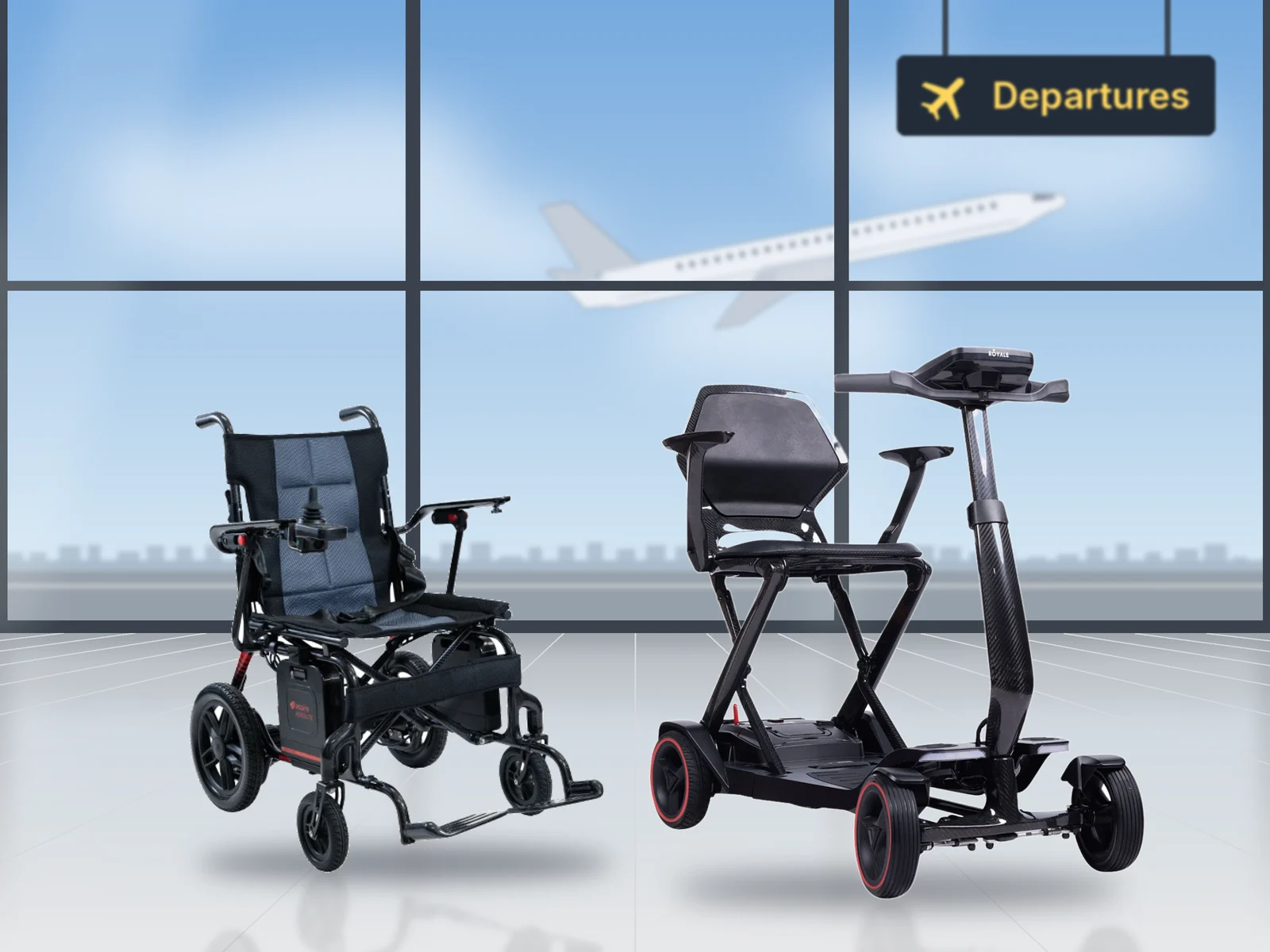
It depends on how you’ll use it at your destination. Folding power chairs are usually lighter and fold in one piece, while boot scooters are more comfortable over longer distances. We’re happy to go through the options with you in the showroom.
Bring your travel plans, your car and any questions. We’ll show you how each model folds, how the batteries come off, and help you choose the one that suits your trip and your everyday life. Supplying under Support at Home and NDIS.
2/136 Keys Road, Cheltenham. Monday to Friday, 9am to 5pm.
This guide is general information based on the IATA guidance for battery powered mobility aids and the airlines’ own pages, checked on 13 November 2026. Rules change and each airline makes the final decision, so always confirm with your airline before you book and again before you fly.
Enter the following information below and someone from our team will be in touch with you as soon as possible to organise a trial for you on the product.